

Online shopping is changing again.
For years, most eCommerce brands focused on showing up in Google search, Google Shopping, paid ads, and social media. That still matters, but shoppers are now adding a new step to the buying journey: they are asking AI tools what to buy.
Instead of searching “best running shoes for flat feet,” a customer may ask ChatGPT:
“What are the best running shoes for flat feet under $150, and which ones are good for walking all day?”
Instead of scrolling through ten product pages, they may ask Gemini:
“Compare these three skincare products and tell me which one is better for sensitive skin.”
This is where conversational commerce, ChatGPT e-commerce, and AI shopping start to matter. Your store does not only need to rank. It needs to be understood, trusted, and recommended by AI-powered search and shopping tools.
How AI Is Changing the eCommerce Experience
AI is changing how people discover, compare, and choose products.
Traditional search usually starts with keywords. A customer manually examines alternatives, types a brief message, and clicks a few links.
AI-powered shopping is different. Shoppers ask full questions. They explain their needs, budget, concerns, preferences, and use cases. Then AI tools summarize options, compare products, and may recommend specific brands.

That one prompt includes buyer intent, budget, pain point, body fit, product category, and decision criteria.
This means eCommerce optimization now has to go deeper than product titles and keywords. Your content needs to answer the real questions customers ask before buying.
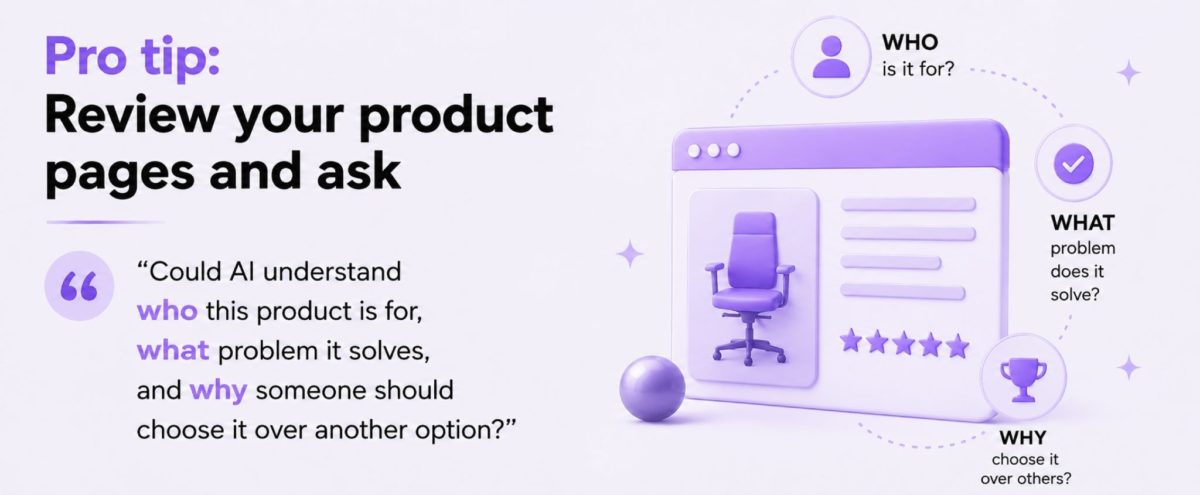
What ChatGPT and Gemini Mean for eCommerce
AI shopping is no longer limited to product research. In 2026, platforms like ChatGPT, Gemini, Google AI Mode, and Perplexity are becoming new product discovery channels, each using product data in different ways.
ChatGPT can pull product catalogue information through OpenAI’s Agentic Commerce Protocol or Shopify’s Agentic Storefronts, while Gemini and Google AI Mode rely heavily on Google Merchant Center, Shopping Graph data, product schema, and structured product details.
For eCommerce brands, this means product pages need to do more than describe what is being sold. They need to answer shopper questions, include accurate pricing and availability, use strong product schema, and provide clear details like size, material, color, use cases, reviews, and compatibility.
The better your product data and website content are, the easier it becomes for AI tools to understand, compare, and recommend your products to the right shoppers.
AI-Powered Product Recommendations
AI tools may recommend products based on detailed customer needs.
For example, a customer may ask:
“Which carry-on backpack is best for a five-day business trip?”
If your product page only says:
“Premium travel backpack. Stylish and durable.”
That may not be enough.
A stronger product page would explain:
“Designed for 3-5 day trips, this backpack fits a 15-inch laptop, has a separate shoe compartment, includes water-resistant fabric, and works as a carry-on for most airlines.”
That gives AI more useful information to work with.
Conversational Shopping Experiences
Conversational commerce means shoppers can ask follow-up questions before they buy.
They may ask:
“Is this good for beginners?”
“Does it work for small spaces?”
“Is it worth the higher price?”
“How does it compare to another product?”
Your store should answer these questions directly through product descriptions, FAQs, comparison guides, blog content, reviews, and help center pages.
Faster Product Research and Decision-Making

AI reduces the time shoppers spend researching, and when they arrive from AI tools, they may already be more informed. That makes AI visibility more than a branding issue. It can directly affect sales.
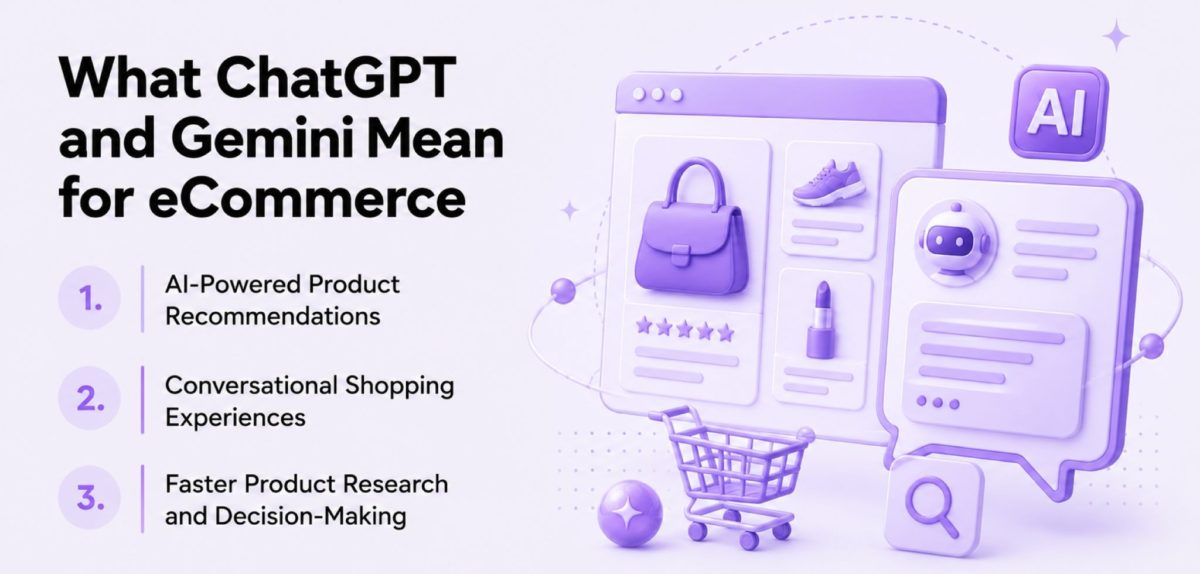
1. Your Product Information Is Complete and Accurate
AI needs details. Thin product pages make it harder for AI systems to understand what you sell.
Your product pages should include:
- Clear product name
- Detailed product description
- Main features
- Use cases
- Size, material, color, dimensions, or technical specs
- Price
- Availability
- Shipping and return information
- Reviews
- FAQs
For instance, describe the type of travel, weekend getaways, corporate travel, international carry-on, road excursions, or everyday commuting, instead of using the phrase “great for travel.”
2. Your Site Is Optimized for Search Engines
SEO is not dead. It is becoming the foundation for AI visibility.
According to Google’s guidelines, generative AI search experiences like AI Overviews and AI Mode still follow fundamental SEO best practices. This includes crawlable pages, helpful content, a clean technical structure, good page experience, and strong eCommerce details.
Strong eCommerce optimization should include:
- Fast page speed
- Mobile-friendly design
- Clear category structure
- Internal linking
- Optimized product pages
- Helpful content
- Clean metadata
- Crawlable pages
3. You Use Structured Data and Product Schema
Search engines can better comprehend your product information with the use of structured data.
It can support product details such as:
- Product name
- Price
- Availability
- Reviews
- Ratings
- Brand
- Images
- Offers
Google notes that structured data is still useful as part of SEO, especially for rich results, even though there is no special schema required only for generative AI search.

How to Prepare Your Ecommerce Store for AI
Improve Product Content
Your product content should answer real buying questions.
Ask yourself:
What would someone ask ChatGPT before buying this product?
Then turn those questions into content.
For example, if you sell skincare, shoppers may ask:
- Is this good for sensitive skin?
- Can I use it with retinol?
- Is it better for dry or oily skin?
- How long does it last?
- What age group is it best for?
If you sell furniture, they may ask:
- Is it good for small apartments?
- Is it easy to assemble?
- What material is it made from?
- Is it pet-friendly?
- How does it compare to a cheaper option?
Clear, practical product information is where e-commerce AI preparedness begins.
Focus on Customer Experience
AI can bring people to your store, but your website still has to convert them.
Make sure your store is easy to use:
- Navigation is simple
- Product filters work properly
- Checkout is short and clear
- Mobile pages load quickly
- Shipping costs are visible early
- Return policies are easy to find
A shopper may trust an AI recommendation, but a confusing checkout can still make them leave.
Build Trust Signals
AI tools look at more than your product page. They may consider reviews, reputation, policies, and third-party mentions.
Add trust signals like:
- Customer reviews
- Real product photos
- Clear return policy
- Shipping details
- Warranty information
- About page
- Contact information
- Business details
- Helpful FAQs

Common Challenges Businesses May Face
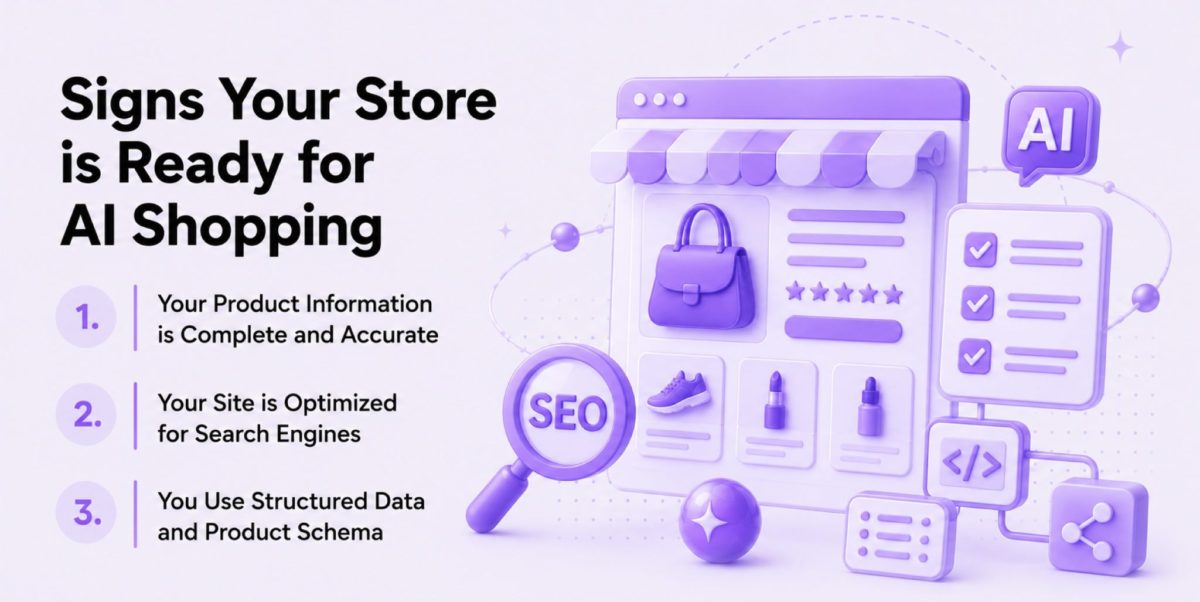
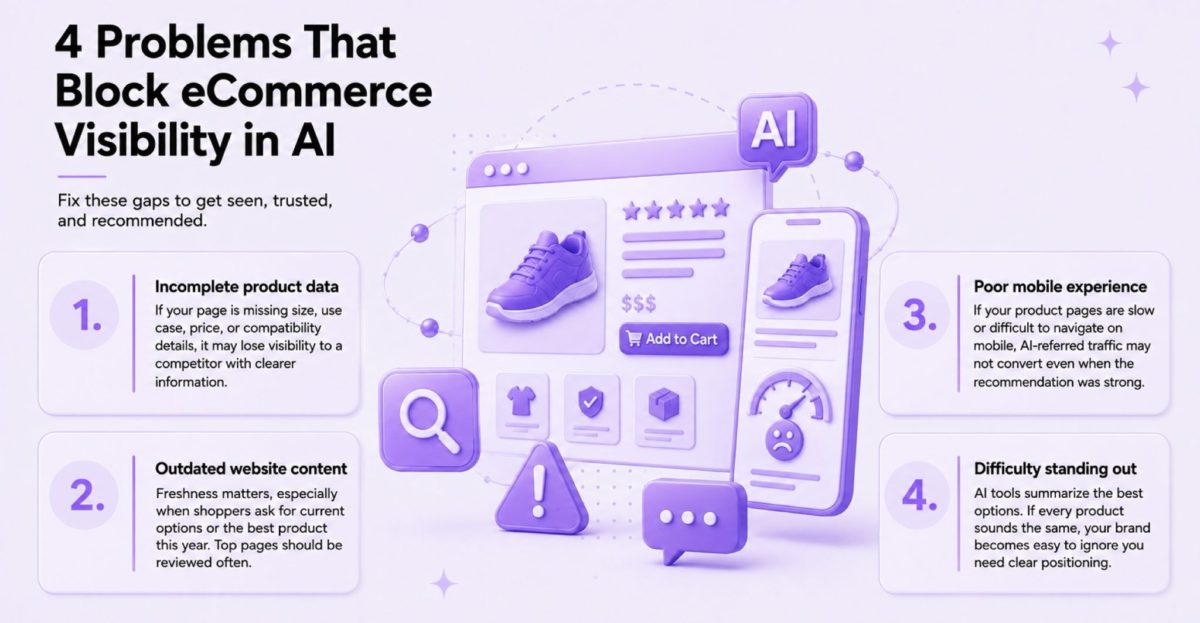
Many eCommerce stores are not ready for AI shopping because their content is too thin or outdated.
Here are the most common problems:
The Future of eCommerce and AI
The future of eCommerce will be more conversational, personalized, and AI-assisted.
Capgemini reported that 71% of consumers want generative AI integrated into their shopping experiences, while over half have replaced traditional search engines with Gen AI tools for product or service recommendations.
That does not mean every customer will buy directly through ChatGPT or Gemini tomorrow. But it does mean AI will influence more product research, comparison, and discovery.
eCommerce brands should expect:
- More AI-powered product discovery
- More conversational commerce
- More personalized recommendations
- More product comparisons inside AI tools
- More importance placed on product feeds
- More value from reviews and real-user content
- More need for clean, structured product data
The brands that adapt early will have an advantage.
Final Checklist: Is Your Store AI-Ready?
Use this quick checklist:
Product Content
- Product pages answer real customer questions
- Descriptions explain use cases, not just features
- Specs, pricing, availability, and shipping details are updated
- Product FAQs are included where helpful
SEO and Technical Setup
- Pages are crawlable
- Product schema is implemented
- Site speed is strong
- Mobile experience is smooth
- Category pages are well structured
Trust and Visibility
- Customer reviews are visible
- Policies are clear
- Business information is accurate
- Product feed is updated
- Content is refreshed regularly
AI Search Readiness
- Your content answers full questions, not just keywords
- Comparison content is available
- Buyer guides support product discovery
- Your brand is visible beyond your website
- Analytics are reviewed for AI-referred traffic
Digilite USA Take: SEO Is the Base, AI Visibility Is the Next Layer
SEO still matters. But eCommerce optimization now needs to include AI search, product feed quality, structured content, and conversational buying journeys.
At Digilite USA, we help eCommerce brands understand how their store appears across AI-powered search experiences and where competitors may be getting ahead. Through AI search audits, e-commerce optimization, and content strategy, we help brands create product pages and supporting content that are easier for both people and AI systems to understand.
In one recent AI search project, better structured and fresher content helped a client improve visibility in Google’s AI Overview and increase organic traffic by 90% in under six months.
The shift is already happening. Your customers are asking AI what to buy. Your store should be ready with clear answers.
FAQs
How is ChatGPT changing eCommerce?
ChatGPT is changing eCommerce by helping shoppers research, compare, and choose products through conversation. Instead of typing short keywords, customers can ask detailed questions and receive summarized product suggestions.
What is conversational commerce?
Conversational commerce is the use of chat, AI assistants, messaging tools, or voice assistants to support shopping. It allows customers to ask questions, compare options, and move closer to purchase through a conversation.
Why is eCommerce optimization important for AI shopping?
eCommerce optimization helps AI tools understand your products, product pages, reviews, pricing, and customer experience. Strong optimization can improve your chances of being discovered in AI shopping and traditional search.
Can AI help customers find products faster?
Yes. AI can help customers narrow down choices, compare features, understand trade-offs, and find products that match their needs faster than traditional browsing.
How can I prepare my online store for the future of eCommerce?
Start with clear product content, structured data, updated product feeds, strong mobile performance, visible reviews, helpful FAQs, and buyer-focused content. Your store should answer the same questions that customers ask ChatGPT, Gemini, and other AI shopping tools.
ChatGPT is changing eCommerce by helping shoppers research, compare, and choose products through conversation. Instead of typing short keywords, customers can ask detailed questions and receive summarized product suggestions.
Conversational commerce is the use of chat, AI assistants, messaging tools, or voice assistants to support shopping. It allows customers to ask questions, compare options, and move closer to purchase through a conversation.
eCommerce optimization helps AI tools understand your products, product pages, reviews, pricing, and customer experience. Strong optimization can improve your chances of being discovered in AI shopping and traditional search.
Yes. AI can help customers narrow down choices, compare features, understand trade-offs, and find products that match their needs faster than traditional browsing.
Start with clear product content, structured data, updated product feeds, strong mobile performance, visible reviews, helpful FAQs, and buyer-focused content. Your store should answer the same questions that customers ask ChatGPT, Gemini, and other AI shopping tools.