


The shop on the corner used to win on signage, foot traffic, and word of mouth. Today, that same shop wins or loses on Google. A potential customer two blocks away pulls out their phone, searches for the best service near them, and either finds you in the top three results or finds your competitor. There is no middle ground.
That shift is not theoretical. Industry research consistently shows that 46% of all Google searches have local intent, and roughly 76% of people who run a local search on their phone visit a business within 24 hours. For U.S. businesses competing in their own neighborhood, online marketing for local businesses has stopped being a nice-to-have and has become the primary way new customers find you. The good news is that digital local marketing is one of the few channels where a small U.S. business can outmanoeuvre a larger national competitor, provided the strategy is right.

Now, let’s break down what local digital marketing actually is, the services that deliver measurable growth, the mistakes that quietly burn budget, and how to choose a partner who can build all of it into a system that compounds over time.
What Is Local Digital Marketing?
At its core, local digital marketing strategy is the practice of using online channels like search engines, maps, social media, review platforms, paid ads, and your own website to attract customers who live, work, or are physically near your business.
General digital marketing aims for reach. National brands, e-commerce stores, and SaaS companies care about audiences spread across countries or continents. Internet marketing for local businesses is the opposite. It deliberately narrows the audience to a geographic radius (a neighborhood, a city, the Dallas-Fort Worth metro area, a state) and prioritizes signals that tell Google, “This business serves this area.”
That focus changes everything: the keywords you target, the way your Google Business Profile is structured, the platforms you advertise on, and the metrics you measure. A national campaign optimizing for total impressions is a very different animal from a local campaign optimizing for booked appointments within a fifteen-minute drive.

Why Online Marketing for Local Businesses Matters
If your customers are local, your marketing has to be too. A few realities make the case more clearly than any sales pitch:
- Search has become the new storefront window.
According to BrightLocal’s ongoing research, 80% of consumers search online weekly for local businesses, and roughly a third do it daily. If they can’t find you, you don’t exist to them.
- Local searchers are high-intent.
Someone typing “emergency plumber Chicago” or “best pho in Austin” is not browsing. They are ready to call, book, or walk in. Online marketing for local businesses lets you intercept that demand at the exact moment it appears.
- The economics are better than traditional ads.
A flyer drop or a print ad in the local paper goes out cold to thousands of people, most of whom do not need you. A well-targeted Google Ad shows up only when someone is actively searching for your service. The waste is dramatically lower.
- Maps and directories are now powerful conversion tools.
A claimed and optimized Google Business Profile, paired with accurate listings across Apple Maps, Yelp, and industry-specific directories, can drive direct calls and direction requests without a single click on your website.

Core Local Digital Marketing Services That Deliver Results
A solid local strategy is not one tactic. It is a layered system in which each service supports the others. Here are the core local digital marketing services that consistently move the needle for U.S. businesses.
Local SEO Optimization
Local SEO is the foundation. Without it, every other channel works harder than it needs to. The fundamentals have not changed dramatically in the last few years, but the bar for execution has risen:
- A fully completed and regularly updated Google Business Profile with accurate categories, services, hours, photos, and Q&A.
- Local keywords woven into your site copy, page titles, and meta descriptions; for example, “Houston HVAC repair” rather than just “HVAC repair.”
- Consistent citations (Name, Address, Phone) across directories such as Yelp, YellowPages.com, Apple Maps, and industry-specific sites.
- City- or neighborhood-specific landing pages that give Google a clear reason to associate your business with each service area.
- Steady, authentic reviews that build trust and feed the local ranking algorithm.
This is the heart of digital local marketing, and it is also where most businesses leave the most opportunity on the table. A strong search engine optimization program is rarely about one big change; it is about getting twenty small things right and keeping them right.
Pay-Per-Click (PPC) Advertising
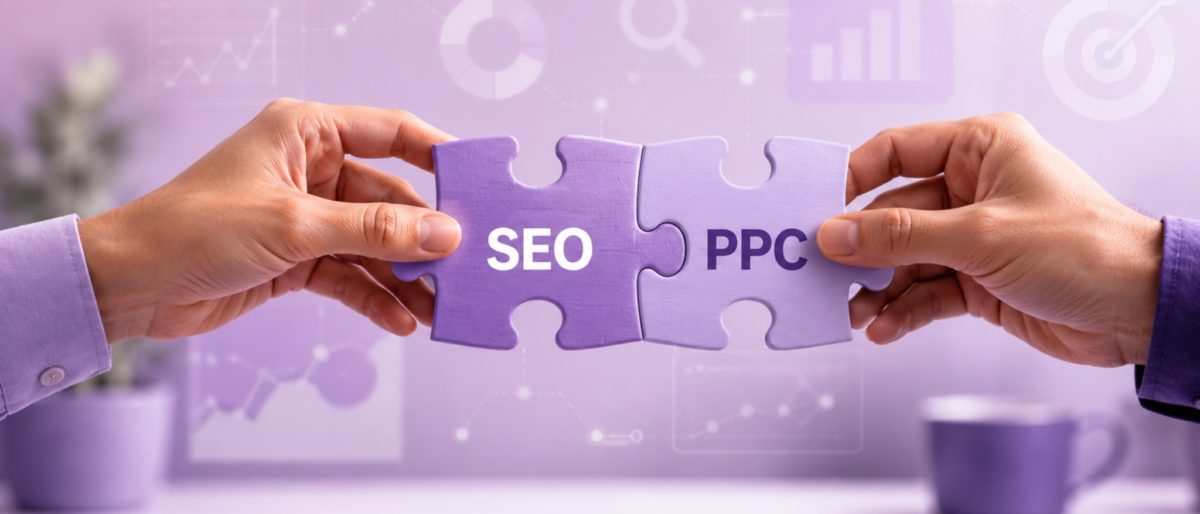
SEO is patient capital. PPC is the accelerator. With Google Ads, Microsoft Ads, and platforms like Meta, you can pay to appear in front of local searchers immediately while your organic presence builds in the background.
Done well, PPC advertising for online marketing local business campaigns relies on three things:
- Tight geo-targeting by postal code, radius, or neighborhood, not just by city.
- Conversion-focused landing pages that match what the ad promised. Sending paid traffic to a generic homepage is one of the fastest ways to waste a budget.
- Negative keyword discipline to block irrelevant clicks before they cost you money.
For a small U.S. business, even a modest monthly ad budget can outperform a much larger national competitor in a specific local market, simply because the dollars are concentrated where they matter.
Social Media Marketing for Local Reach
Social media is where local communities still gather. Facebook groups, neighborhood Instagram accounts, and TikTok creators are powerful (and often underused) channels for visibility.
What works:
- Geographically targeted ads on Meta platforms that hit a specific radius around your business.
- Partnerships with local micro-influencers who already have the audience you want to reach.
- Content that reflects the neighborhood, such as local events, customer features, and behind-the-scenes from your storefront, rather than generic posts that could come from anywhere.
A consistent social media marketing presence does two jobs at once: it builds top-of-funnel awareness, and it gives prospects who Google you a reason to trust that you are actively operating and engaged.
Website Optimization & Conversion
You can pour budget into SEO, ads, and social, but if your website fumbles the handoff, none of it converts. A modern local business site needs to be:
- Mobile-First: Most local searches happen on a phone. If your booking form is unusable on iOS, you are losing leads.
- Fast: Pages that take longer than three seconds to load shed visitors before they ever see your offer.
- Clear: About what you do, where you do it, and how to take the next step (call, book, request a quote) within seconds of landing.
- Backed by Trust Signals: Real photos, real reviews, recognizable certifications, and proof of local credentials.
This is where web design and development stop being a creative exercise and become a revenue function. Every additional second of load time, every confusing menu, every missing call-to-action is a quiet leak in your funnel.
Reputation Management & Reviews
Reviews are no longer just social proof; they are a ranking factor and a deciding factor. A near-perfect 5-star average with a handful of reviews loses to a 4.6 with two hundred. Volume, recency, and response all matter.
A practical reputation program for any local business looks like this:
- Ask every satisfied customer for a review, ideally through a short follow-up email or SMS with a direct link.
- Respond to every review, positive or negative, in a calm, professional tone.
- Monitor mentions across Google, Yelp, Facebook, and any industry-specific platforms relevant to your business.
- Treat negative reviews as free product feedback: fix the root cause, then reply publicly so future prospects see the resolution.

Proven Strategies to Improve Local Marketing Results
Beyond the core services, a few quieter strategies separate businesses that grow steadily from those that plateau:
- Consistent NAP Everywhere: Name, Address, and Phone Number have to be identical across every listing, your website, your Google Business Profile, and every directory. Even small mismatches (Suite vs. Ste, hyphenated vs. unhyphenated phone numbers) confuse search engines and dilute ranking signals.
- Local Content with a Real Reason to Exist: Blog posts and resource pages built around questions your customers actually ask, “How much does roof repair cost in Miami?” or “Best neighborhoods in Brooklyn for first-time buyers?”, attract qualified traffic and earn backlinks from local sites.
- Geo-Targeted Keyword Strategy: Instead of competing for broad national terms, target longer, more specific phrases tied to neighborhoods, postal codes, and nearby landmarks.
- Earned Local Backlinks: A sponsorship of a local team, a quote in the community newspaper, a partnership with another nearby business; these create the kind of local authority Google can verify.
- Track Everything: Call tracking numbers, form submission analytics, UTM-tagged campaigns; every channel needs a feedback loop, or you are guessing.
None of these sounds flashy, but layered together, this is what digital marketing local results look like when they compound.
Common Mistakes in Local Digital Marketing
It is worth being blunt: many local businesses underperform not because the channels don’t work, but because of avoidable mistakes.
- Ignoring Local SEO Entirely: Some businesses still treat their website as a digital business card and never touch their Google Business Profile after setup. That alone caps growth.
- Inconsistent Business Information: Old phone numbers on Yelp, outdated hours on Apple Maps, a different address on Facebook; every inconsistency erodes trust with both search engines and customers.
- Running Ads Without Tracking: Paid campaigns without conversion tracking are budget bonfires. You will know you spent the money. You will not know whether it worked.
- Treating Social Media as a Billboard: Posting promotional content into the void without engagement, replies, or community focus is wasted effort.
- Weak Audience Targeting: Internet marketing for local businesses only works when the targeting is genuinely local. Too many campaigns waste impressions on people who will never set foot in your service area.
- Set-and-Forget Thinking: Local search algorithms, ad platforms, and consumer behaviour shift constantly. A strategy that worked eighteen months ago may not work today.
None of these is catastrophic on its own. Stacked together, they explain why so many local marketing budgets feel like they are disappearing into a black hole.
How to Measure Real Results
Real results are the phrase that does the most work in this entire conversation. It is also the phrase most agencies are vague about. For local businesses, the metrics that actually matter are unambiguous:
- Traffic From Local Searches: Not total sessions, but sessions where intent is clearly local; geo-modified keywords, “near me” queries, direct map clicks.
- Conversion Rate: What percentage of visitors take a meaningful action: call, book, request a quote, submit a form?
- Calls, Bookings, and Store Visits: Call tracking software, appointment platforms, and Google Business Profile insights (which surface direction requests and calls) give you direct visibility into bottom-funnel outcomes.
- Cost Per Acquired Customer: Calculated across every channel: SEO, PPC, social, and email. If you do not know what a new customer costs you, you cannot decide where to scale.
- Return on Ad Spend (ROAS) and Overall ROI: The final number that decides whether your strategy is working or not.
A good dashboard pulls all of this into one place, ideally reviewed monthly with someone who can read it critically and adjust.

Choosing the Right Local Digital Marketing Services
Not every agency is built to deliver this. Many run generic, copy-and-paste programs that ignore the realities of a specific U.S. market. When evaluating partners, look for:
- Demonstrated Local Results: Case studies in markets and industries that resemble yours, not just logos on a slide.
- Data-Driven Decision Making: A partner who can show you exactly which channels drove which outcomes, and who adjusts the plan accordingly.
- Custom Strategy, not Packages: Every local business has a different competitive landscape. A flyer template will not fit a dental practice, an HVAC company, and a Shopify boutique equally well.
- Transparent Reporting: Monthly reports written in plain language, not jargon designed to obscure underperformance.
- Full-Stack Capability: SEO, paid ads, web development, content, and reputation should work together. Stitching together three or four narrow vendors creates gaps no one owns.
The right partner treats online marketing for local businesses as an integrated system, not a menu of disconnected services.
Bringing It All Together
Digital local marketing rewards businesses that play the long game. Local SEO compounds. Reputation compounds. A well-built website pays back its cost many times over the years it stays online. Paid ads handle the short term, but the durable growth comes from getting the fundamentals right and improving them quarter by quarter.
If you are a business owner in the U.S. trying to grow within a defined service area, the path forward is clear: audit what you have, fix the leaks, invest in the channels that match how your customers actually search, and measure relentlessly. The competitors who are pulling ahead in your market right now are doing exactly that.

Frequently Asked Questions
- What’s the difference between general digital marketing and local digital marketing?
General digital marketing targets broad national or global audiences. Local digital marketing focuses on people in a specific geographic area, and the strategies, keywords, platforms, and metrics are all tailored to attract customers who can realistically buy from you. - How long does local SEO take to show results?
Most businesses see meaningful movement in three to six months, with stronger results emerging at the nine- to twelve-month mark. Local SEO compounds over time, so the earlier you start, the better the long-term position. - Is PPC or SEO better for local businesses?
Both, ideally. PPC delivers immediate visibility while SEO builds long-term equity. The strongest local strategies use PPC to capture demand today and SEO to lower acquisition costs over time. - Do I need a website if I have a Google Business Profile?
Yes. A Google Business Profile is essential, but a website is where prospects evaluate you in depth, request quotes, book appointments, and convert. The two work together. - How much should a small local business spend on digital marketing?
Budgets vary widely, but most local businesses see strong returns when they invest enough to maintain consistent activity across SEO, ads, and content. A discovery conversation with a specialist will give you a realistic range for your industry and market. - Are reviews really that important?
Yes. Reviews influence both rankings and buying decisions. Volume, recency, average rating, and how you respond to negative reviews all factor into how customers and search engines perceive your business. - Can I do local digital marketing in-house?
Some pieces, responding to reviews, posting on social media, are perfectly manageable in-house. SEO, paid advertising, and analytics typically benefit from specialist expertise, especially in competitive markets. - What is the biggest mistake local businesses make?
Treating marketing as a one-time setup rather than an ongoing system. Local search and consumer behaviour shift constantly. The businesses that win are the ones that monitor, measure, and adjust.