
We see it all the time. A founder has a spark of an idea. They stumble onto tools like Lovable, Bolt, or similar AI builders, and within days, sometimes hours, they have something that looks like a real product. Screens load. Buttons click. It feels like you’re onto something.
Then, somewhere around week three or four, things start to crack.
A feature breaks and you can’t figure out why. Data stops saving correctly. Authentication gets confusing. Payments misbehave. Edge cases pile up. And then one day, progress just… stops.
That’s usually when people find us at Digilite.
“Can you take over what I built?”
The question we hear most often and the one with the most uncomfortable answer.
Our honest answer is usually no. And in this post, we want to explain why; not to discourage you, but because understanding this gap can save you months of time and real money.
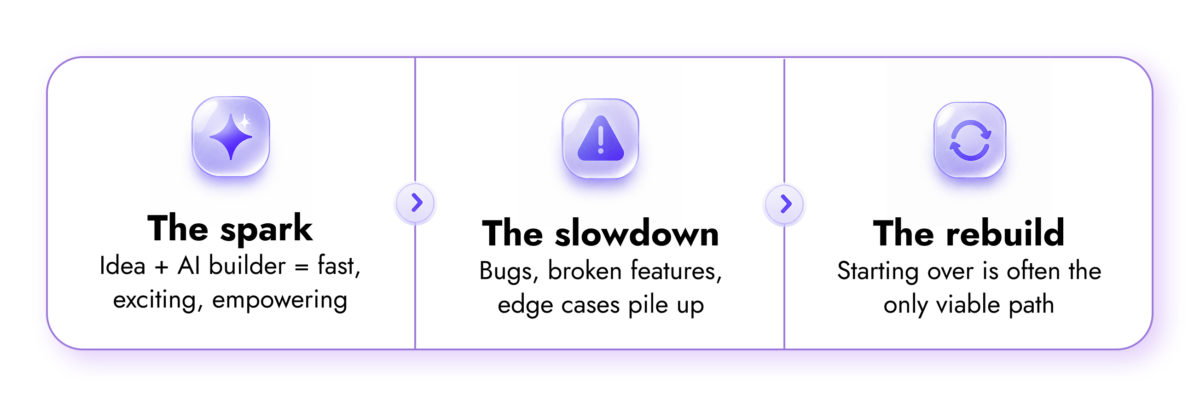
The journey most founders take
The illusion of progress
Vibe coding creates momentum. That’s genuinely its superpower and its most dangerous trap at the same time.
It gives you the feeling of building a real system without ever forcing the deep technical decisions that a real system requires. Under the surface, almost every AI-generated prototype we’ve reviewed is missing the same critical foundations:
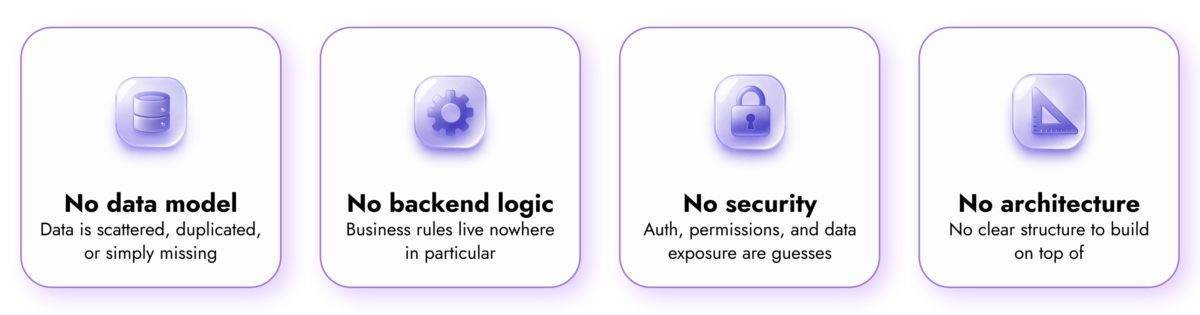
What you end up with isn’t a product; it’s a collection of screens held together just well enough to demo. It feels like progress early on, and like a wall later.
Why agencies can’t just “pick up where you left off”
From the outside, it seems completely reasonable to hand off an existing prototype. In practice, it’s often more expensive and more risky than starting from scratch.
Before any professional team can write a single line of new code, they’d need to reverse-engineer everything already built; the logic, the data flows, the assumptions baked into generated code that no human ever documented. That reverse-engineering effort alone can cost more than a clean rebuild.
The uncomfortable truth: when the cost of understanding a codebase exceeds the cost of replacing it, starting over isn’t pessimism; it’s the only responsible option.
The real cost isn’t money; it’s time
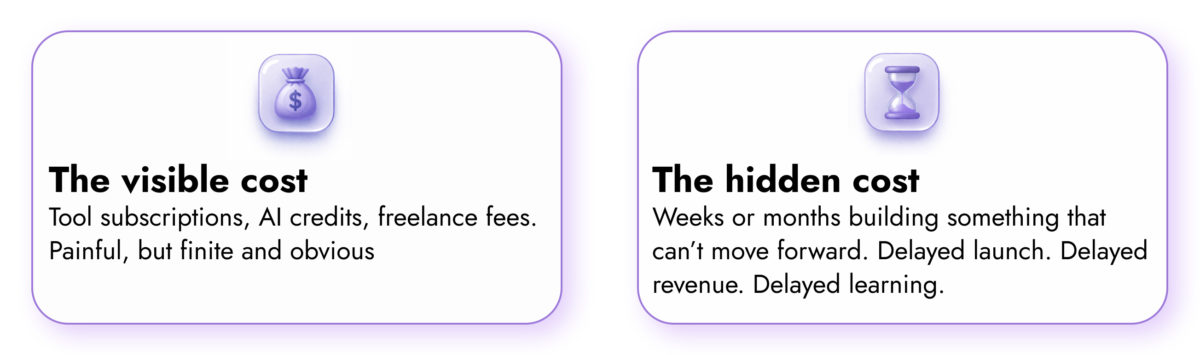
By the time a founder brings in an engineering team, the timeline has often slipped by two to four months. In the US startup landscape where speed to market, investor timelines, and competitive windows are everything, that gap is rarely recoverable.
Where vibe coding actually makes sense
To be clear: AI builders aren’t useless. They’re genuinely powerful just not for what most people use them for.
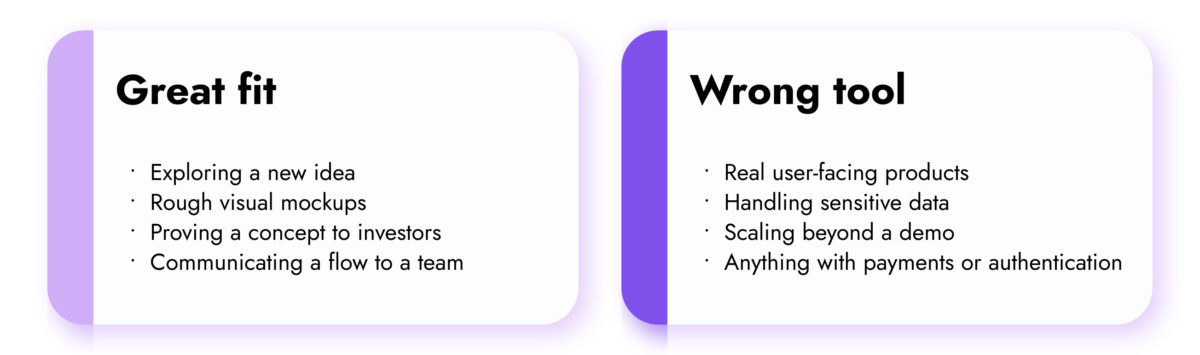
Use AI tools to think. Use engineers to build.
What a production-ready product actually requires
A real product isn’t about screens that load, it’s about systems that hold up under real users, edge cases, scale, and scrutiny.
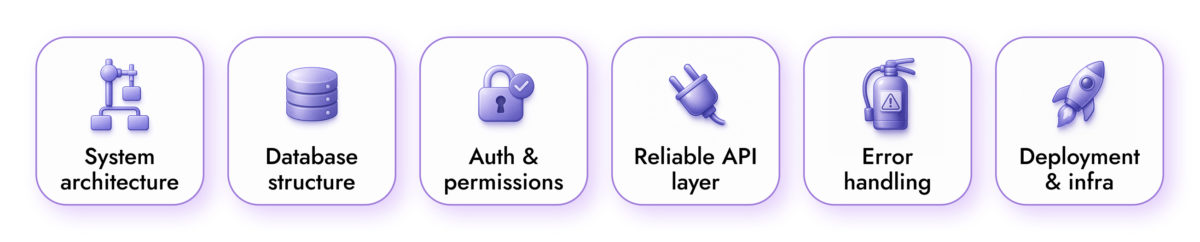
This is what experienced engineering teams bring to the table. At Digilite, we build with this foundation in mind from day one; whether the project is a complex SaaS platform or a focused mobile app. The goal is always the same: build something that works today and can grow tomorrow.
Custom software development for US startups and growing businesses
Across the US we work with founders who have outgrown what AI builders can offer and need a real engineering team to take them further.
American startups face a unique pressure: the pace of the market is fast, investor expectations are high, and the cost of a delayed launch compounds quickly. Digilite partners with US-based companies to deliver web and mobile applications that are built to production standards from the start; no shortcuts, no rebuilds six months in.
Whether you’re pre-seed and need to ship an MVP the right way, or Series A and ready to replace a fragile prototype with a scalable platform, we’ve worked with teams at every stage. Remote-friendly, async-capable, and experienced with US timelines and expectations.
A smarter approach for non-technical founders
If you’re not an engineer, here’s the most practical framework we can offer:
1. Use AI tools to explore
Sketch the idea, test assumptions, build a rough demo.
2. Validate direction, not product
Show it to users. Get signal. Don’t mistake the demo for the product.
3. Stop before complexity grows
The moment you need real auth, real data, or real payments – pause.
4. Bring in a team to build the real thing
Start fresh with an architecture designed to last, not just to demo.
This approach saves time, reduces frustration, and gets you to a real product faster than trying to fix what was built in the excitement phase.
Ready to build the right way?
“AI has changed how products start. It hasn’t changed what it takes to finish them. Knowing when to stop is what saves you.”
— Digilite Team